
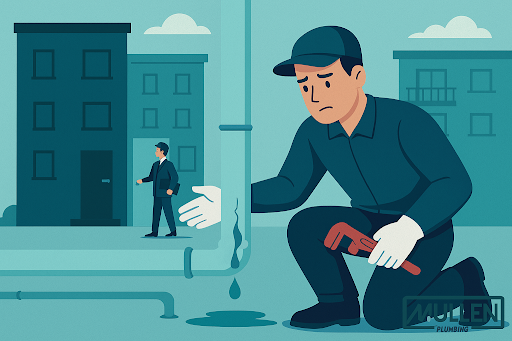
When plumbing fails in a single-family home, it’s stressful enough. But in a multi-unit building? A burst pipe doesn’t just ruin one person’s day; it can turn into a full-blown property-wide disaster. Water seeps through ceilings, tenants start calling, and repairs spiral fast.
The truth is, most of these emergencies are preventable. You just have to catch the small signs before they snowball.
The Chain Reaction of Apartment Plumbing Problems
Apartment plumbing in Long Beach has a personality all its own. Most of these buildings have been around long enough to tell stories: pipes that creak when someone on the third floor showers, drains that seem fine until they suddenly aren’t. In multi-unit setups, everything’s connected in ways you don’t always see.
A small clog in one kitchen sink can slowly wind its way through the system, surprising three other apartments before anyone realizes what’s happening. By the time water starts pooling somewhere it shouldn’t, it’s already a building-wide issue.
That’s why preventing plumbing emergencies isn’t just about jumping in when things go wrong. It’s about building a rhythm: regular checks, smart habits, and systems that catch the problem long before it becomes a 2 a.m. call.
Know Your Building’s Weak Spots
Every building has them: that one recurring leak in the laundry room, the unit where the kitchen sink always backs up, the old copper line that rattles at night. These small irritations are warning signs. Regular inspections, especially of shared water lines, boiler rooms, and rooftop vents, can save you from a major incident later.
Property managers play a bigger role in plumbing prevention than most people realize. They’re the ones coordinating inspections, scheduling maintenance, and spotting small leaks before they become costly repairs. Companies like CMC Realty make preventive plumbing a regular part of their multi-family property management approach in Long Beach, keeping buildings safer and maintenance more predictable.
Educate Tenants (Because Half the Battle Is Human Error)
Some plumbing “emergencies” start with well-meaning tenants. Disposing of grease down the sink, flushing wipes labeled “flushable,” or ignoring a slow drain can all set off a chain reaction.
That’s why clear communication matters. Posting friendly reminders in laundry rooms or sending occasional maintenance tips through tenant portals works better than you’d think. It helps tenants understand how everyday habits impact the building’s overall plumbing system.
Routine Maintenance Beats Emergency Calls Every Time
Here’s the thing: you can totally predict emergency plumbing prevention. Monthly drain cleaning, biannual camera inspections, and annual water heater servicing can drastically reduce surprise breakdowns.
For multi-unit buildings, a routine maintenance plan should include:
- Checking water pressure in shared lines.
- Inspecting for corrosion and rust on visible pipes.
- Cleaning main drains to prevent backups.
- Testing sump pumps and water shutoff valves.
If your property manager is on top of this, you’re halfway there. Good management keeps vendors like plumbers, electricians, and inspectors synced, so problems are caught before they escalate.
Respond Fast When Small Problems Show Up
There’s a golden rule: if you can hear it, see it, or smell it, call it in. A small drip might seem harmless, but in a multi-unit setup, that drip could be signaling a hidden burst waiting to happen.
Encouraging tenants to report small plumbing issues early keeps maintenance costs down and relationships smooth. And when the call does come, having a reliable plumbing service on standby can make all the difference.
Preventive Tools Worth the Investment
Technology helps too. Smart water sensors can detect leaks before they spread. Automatic shutoff valves can stop flooding within seconds. These tools might seem excessive until you compare their cost to a full-floor drywall replacement.
Multi-family property management in Long Beach is gradually adopting these tech-forward approaches because they save both time and tenant goodwill. The sooner water stops flowing where it shouldn’t, the better for everyone involved.
A Team Effort That Pays Off
Don’t think that avoiding plumbing emergencies is about being lucky. No, it is about partnerships. Plumbers, property managers, and owners each play a part.
Property managers coordinate maintenance and keep buildings compliant. Local plumbers ensure that the technical side: the pipes, pressure, drainage, and diagnostics, stays reliable. When both sides communicate, emergencies drop, and tenant satisfaction rises.
At the end of the day, it’s about balance: proactive care, clear communication, and trusted local expertise.
Final Thoughts
There’s no magic trick to a problem-free plumbing system. But there is a method: routine checks, smart technology, and collaboration. Whether you manage a small duplex or a large apartment complex, preventing emergencies is always cheaper and less stressful than cleaning up after them.
If your building needs expert plumbing care that helps prevent the next big mess, reach out to the team at Mullen Plumbing. The team provides reliable apartment plumbing in Long Beach, focusing on lasting solutions and long-term prevention, so your property and your peace of mind stay intact.
Key Takeaways
- Regular inspections and maintenance are the backbone of emergency plumbing prevention.
- Educating tenants on small habits helps protect entire plumbing systems.
- Smart tools like water sensors and automatic shutoff valves can prevent costly damage
- Strong partnerships between plumbers and multi-family property management in Long Beach keep buildings compliant and tenants happy.
- Working with a trusted local team like Mullen Plumbing ensures reliable, long-term protection for every unit.